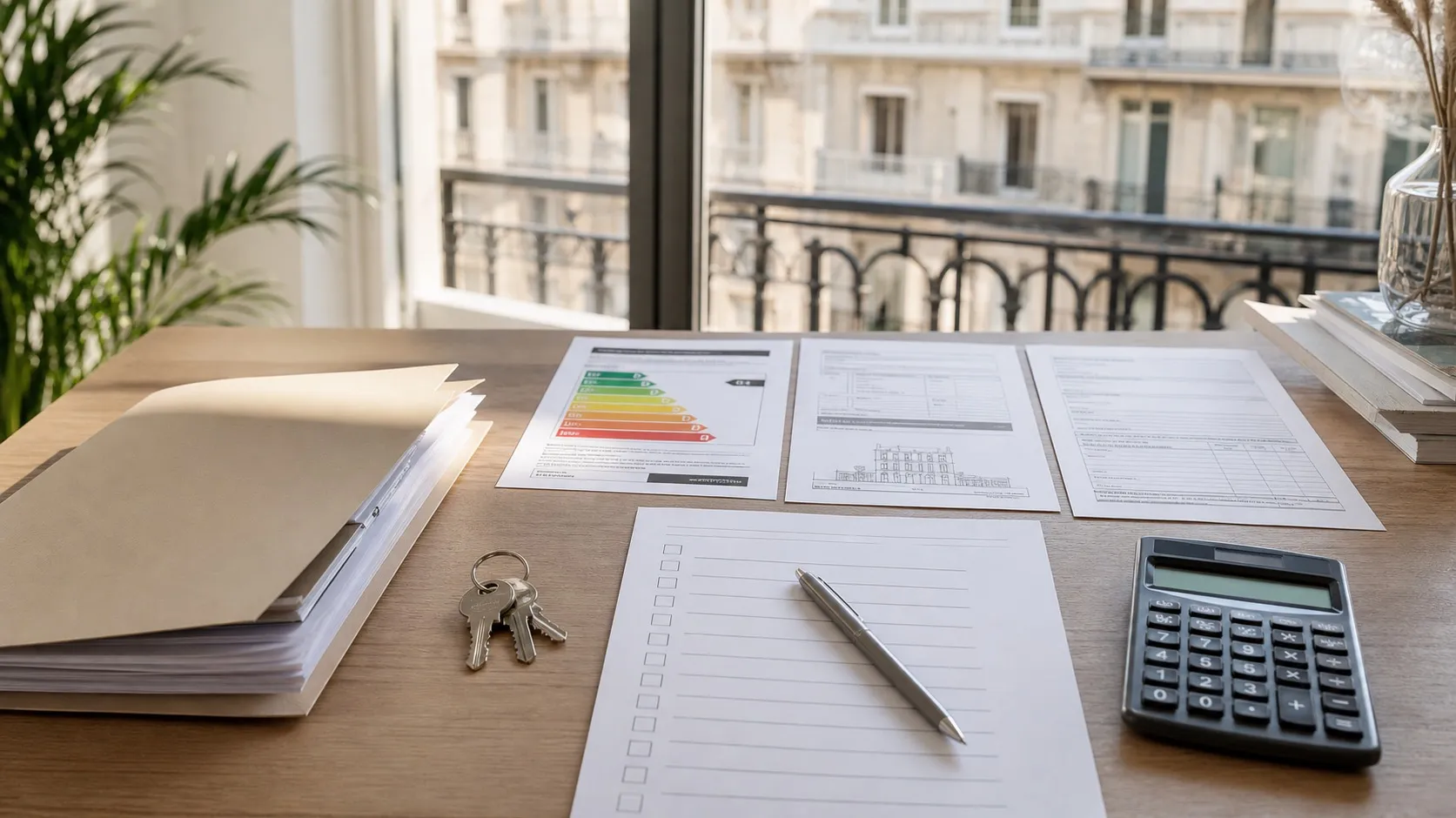


Yes: a foreigner can buy an apartment in Barcelona. The General Council of Notaries describes a home purchase before a notary; you do not need to be Spanish, a Spanish tax resident, or the holder of a residence permit to acquire the property. The paperwork changes. So do the bank file, the transaction taxes, and what happens later if you live in the home, rent it, or sell it again.
This guide covers buying an apartment in Barcelona as a foreigner with a cut-off of 18 October 2026. It separates residents from non-residents, EU buyers from non-EU buyers, and cash purchases from mortgaged ones. It is not personal legal, tax or mortgage advice. For your case, confirm it with a lawyer, notary, tax adviser and bank.
In the second half of 2025, the Notarial Statistical Information Centre recorded 66,629 free-market home purchases by foreigners in Spain, 18.4% of the total. Barcelona still draws a share of that demand. The deal still turns on the NIE, the nota simple, the seller’s tax residence and the cash you must have ready on completion day.
Practical rule: you can buy without living in Spain. Do not improvise the NIE, the account used to pay the price, or the settlement of ITP or the 3% withholding if the seller is a non-resident.
Direct answer: what you can do and what nationality does not change
Sources: Ministry of the Interior (NIE), Notaries and Land Registry.
Foreign nationality is not a bar to an ordinary urban home purchase in Barcelona. The bottleneck is more mundane: identify yourself before the notary and the Tax Agency, prove the seller’s title, and pay taxes and costs with a clear bank trail.
Buying does not turn a NIE into a residence permit. It does not replace municipal registration (padrón) or tax residence. It also does not, by itself, open public grants designed for residents’ main homes, and it does not reopen the old residence-by-investment route: that channel no longer accepts new applications under Organic Law 1/2025.
Almost any serious purchase still needs an assigned NIE, a valid passport or identity document, enough money for the price, taxes and costs (cash or approved finance), and a public deed with Land Registry registration if you want full registry protection.
The generic purchase path, without the foreign-buyer cut, is in the ultimate guide to buying a home. This page focuses on what changes when the buyer is not Spanish or not a resident.
NIE and a Spanish bank account: the start you cannot skip
Official sources: Interior on the NIE and Notaries.
The Ministry of the Interior defines the NIE as a personal, unique and exclusive number for foreigners who deal with Spain for economic, professional, social or other interests. That number must appear on the documents issued or processed for them. Buying an apartment falls squarely inside that case.
Requirements Interior sets for requesting the assignment:
- Not being unlawfully present in Spain.
- Stating the reason for the request.
- Filing the signed standard form.
- Providing a full passport or other valid travel or identity document, original and copy.
- If a representative acts, sufficient power that expressly authorises them.
Filing routes according to Interior:
| Where you are | How you file |
|---|---|
| In Spain | In person at a Foreigners Office or Police Station |
| In Spain with a representative | Through a legal representative, at the same offices |
| Outside Spain | At the Spanish consular office in your country of residence |
Without a NIE, the notary, the bank and the Tax Agency rarely close the chain smoothly. The NIE is identification, not a residence card.
A Spanish bank account is not listed as a legal requirement of the sale on the Interior or Land Registry pages, but almost every real deal needs one: price transfer, ITP payment, the 3% withholding if it applies, and receipt of mortgage funds. A non-resident can open an account; the bank will ask for NIE, passport and proof of the origin of funds. Start that process before you sign a deposit contract, not in the week of the deed.
If you buy remotely, a power of attorney granted abroad usually needs an apostille or legalisation and, if it is not in Spanish, a translation. Interior points to Migration’s legalisation and translation sheet for foreign documents; the purchase notary will also check that the power is sufficient.
EU, non-EU, padrón and tax residence
Sources: Tax Agency Non-Resident Manual on residence, Interior (NIE) and IRNR property taxation.
Nationality, padrón and tax residence get mixed up easily. They are not the same thing.
An EU or EEA citizen is subject to different stay and residence rules from a non-EU national. That affects how you live in Spain, not the basic right to buy the property.
Padrón is municipal registration. It matters for school, local healthcare, many grants and day-to-day paperwork. It is not, by itself, the Tax Agency’s definition of tax residence.
Tax residence is different. Under the Tax Agency non-resident taxation manual, a natural person is treated as habitually resident in Spain if they remain in Spain for more than 183 days during the calendar year, counting sporadic absences unless they prove tax residence in another country, or if the main base of their activities or economic interests is in Spain. There is also a presumption when a non-separated spouse and dependent minor children habitually reside here.
Why it matters when you buy:
- If you are a non-resident and keep the apartment for your own use or empty, the Tax Agency notes that urban property can generate imputed income under IRNR.
- If you rent it out, the rental income is taxable.
- If you later sell as a non-resident, the capital gain also falls under IRNR, and the next buyer may have to withhold 3%.
Padrón can be needed for reduced ITP rates tied to a main home or for public grants. Tax residence decides whether you file under personal income tax (IRPF) or non-resident income tax (IRNR). Mix the three up and you will sign with the wrong numbers.
Purchase costs in Catalonia: ITP, AJD and who pays what
Main source: Catalan Tax Agency, conveyance of real estate. Also: Notaries.
On a typical second-hand purchase without VAT, the buyer settles Transfer Tax (TPO) with Form 600 before the Catalan Tax Agency. The ATC publishes the general bracket tariff on the property value:
| Total property value | Accumulated full quota | Remainder up to | Bracket rate |
|---|---|---|---|
| From €0 | €0 | €600,000 | 10% |
| From €600,000 | €60,000 | €300,000 | 11% |
| From €900,000 | €93,000 | €600,000 | 12% |
| From €1,500,000 | €165,000 | Onwards | 13% |
The ATC tax-base rules set the base, where a reference value (valor de referencia) exists, as the greatest of that reference value, the declared value and the agreed price or consideration. Check the reference value in the Cadastre electronic office before you budget. How to read the tariff: if that base is €450,000, the general rate is 10% of the base. If the base is €750,000, it does not pay 11% on the whole amount: it pays €60,000 on the first bracket and 11% on the €150,000 above €600,000.
The same ATC page sets 20% when the purchaser is a large holder or when an entire residential building is acquired, under codes TGT and TEH. It also lists reduced main-home rates if the conditions are met: 7% for protected housing (VPO), 5% for buyers aged 35 or under, large families, disability, single-parent families or victims of gender-based violence, and 4% or 3% rates in certain rural municipalities. Those reductions are not automatic: they require main-home use and the rest of the ATC conditions.
If the deal carries VAT (new build or taxable non-exempt cases), the public deed is charged with stamp duty (AJD). The ATC indicates 1.5% under tariff AJ4 when the transfer is subject to VAT, and 3.5% under tariff AJ5, from 27 June 2025, when the seller has waived the VAT exemption.
Other usual buyer costs, apart from the regional tax:
- Notary and Land Registry, under regulated fees.
- Agency/gestoría, if you use one.
- Appraisal, if there is a mortgage.
- Possible 3% withholding if the seller is a non-resident.
- Possible role as substitute taxpayer for municipal capital gains tax if the seller is a non-resident natural person.
Budget taxes and costs before you offer. In Catalonia, the general 10% ITP on a mid-range second-hand flat already means serious cash beyond the deposit.
Mortgages as a resident or non-resident
References: Banco de España, mortgages, Law 5/2019 and the internal guide on mortgage approval requirements in Spain 2026.
Banco de España reminds borrowers that a mortgage is a long-term financial decision: you need to examine the offer, compare it and check whether you can afford repayments over a long period of time. Law 5/2019 sets the transparency and borrower-protection framework for real estate credit. Neither source forces a bank to finance a non-resident on the same terms as a resident with a Spanish payroll.
In commercial practice, not documented here as a state rule, lenders often ask for a larger deposit, more home-country paperwork and more time when the buyer does not live in Spain. Sworn translations, foreign income certificates and proof of funds show up again and again. This guide does not invent an official LTV percentage for non-residents: each bank sets that figure in its own risk policy.
If you are a tax resident, or you have stable Spanish income, the file looks closer to a local buyer’s. Debt ratio, job seniority and CIRBE still matter. Ask for the FEIN and compare APR, not only the headline rate.
If you are a non-resident, expect a larger own deposit and less bank appetite. A Spanish account and NIE remain basic pieces. If the sale depends on the mortgage, write the financing clause in the deposit contract clearly; the detail is in the Barcelona deposit contract guide.
The full documentation checklist is in mortgage approval requirements for 2026. For foreign buyers, the difference is usually extra proof friction and, often, a lower financing ceiling.
If the seller is a non-resident: 3% withholding and municipal capital gains tax
Tax Agency sources: purchaser withholding, Form 211 instructions and cases without Form 211. Capital gains: Article 106 of the Local Treasuries Act.
This point traps foreign and local buyers alike. Your nationality as buyer is not the trigger. The seller’s tax residence is.
The Tax Agency states that the purchaser of a property owned by a non-resident must withhold and pay 3% of the agreed consideration as payment on account of the transferor’s tax, using Form 211. The Form 211 instructions spell out:
- Who is obliged: resident or non-resident purchasers, natural or legal persons.
- Percentage: 3%.
- Payment deadline: one month from the date of transfer.
- If it is not paid, the property is charged with payment of the lower of that withholding and the corresponding tax.
You do not have to withhold, under the cases without Form 211, when the transferor proves with a Tax Agency certificate that they are subject to Personal Income Tax or Corporate Tax, or when property is contributed on the incorporation or capital increase of resident companies.
At the notary table that becomes a concrete figure: if the price is €400,000 and the withholding applies, the seller does not receive €400,000 free; €12,000 is held back to pay the Tax Agency. That 3% is paid to the Tax Agency instead of the seller, so the buyer needs cash to split the consideration 97%/3% plus ITP and notary costs, not an extra 3% on top of the full price.
Municipal capital gains tax (IIVTNU) is a separate tax. On onerous transfers, the ordinary taxpayer is the transferor. Article 106.2 of the consolidated Local Treasuries Act says the purchaser acts as substitute taxpayer when the transferor is a natural person not resident in Spain. In Barcelona that is settled in the municipal circuit; the operational detail is in the municipal capital gains tax guide.
Before you sign, ask the seller for proof of tax residence. If they are a non-resident, budget the 3% and the capital gains tax as substitute. Do not leave it to an informal chat on completion day.
Deposit contract, nota simple, notary and Land Registry
Base: Notaries, Land Registry and Interior for identity.
This sequence usually works best for a foreign buyer:
- A clear search brief and filters: total budget including taxes, neighbourhood, use (main home, second home or investment). For prices by area, see the 2026 neighbourhood price guide; for family or expat fit, see best Barcelona neighbourhoods for families and expats.
- An up-to-date nota simple before you move a serious deposit. The Land Registry publishes ownership, charges and real rights. Without that reading, do not sign arras.
- Deposit contract with type of arras, deadlines, financing condition if it applies, and a document list. The checklist is in Barcelona deposit contract: what to check before signing.
- Public deed. The notary identifies the parties, checks capacity and powers, describes the property and warns about tax duties. The General Council of Notaries grounds the sale in that preventive legal certainty.
- Settlement of ITP or AJD and filing at the Registry. The Land Registry explains that registration provides publicity against third parties and that, to register, you must prove payment of the taxes for the act, although the presentation entry can be obtained earlier.
For a foreign buyer, the expensive failures here are familiar: signing arras without a usable NIE, accepting a defective power of attorney, or discovering on payment day that the seller is a non-resident and the 3% must be withheld.
2026 limits: golden visa closed and grants that require residence
Rule: Organic Law 1/2025. Tax residence: Tax Agency manual. Grants context: housing subsidies and grants for buying a home 2026.
The twenty-first final provision of Organic Law 1/2025 leaves Articles 63, 64, 65, 66 and 67 of Law 14/2013 without content, the investor visa and authorisation block. The same law sets its entry into force three months after publication in the Official State Gazette of 3 January 2025: 3 April 2025. From then on, buying an apartment, for whatever amount, does not open a new residence-by-investment application.
The same provision adds a transitional regime: anyone who filed before that date can receive the visa or authorisation under the rules in force when they filed; and visas or authorisations already valid keep their validity for the time granted, with renewals under the rules of the original authorisation. That does not create a new door for someone who starts looking for a flat in 2026.
Anyone who is not a tax resident under the Tax Agency criterion should also not assume a grant designed for a main home. Many support lines ask for residence, padrón or first-access conditions that a non-resident does not meet. Do not treat this page as a catalogue of amounts. Check the 2026 grants guide and confirm the residence requirement in the specific call before you build your budget around a subsidy.
How to decide: cash or mortgage, main home or investment
Criteria anchored in ATC, Tax Agency IRNR property and Banco de España.
Before you offer, answer this with numbers.
Can you close without a bank?
If you pay cash, you reduce contingent conditions and timelines, but you do not reduce ITP or the need for a NIE. If you need a mortgage, measure the real deposit first: price minus expected loan, plus ITP or, if the deal is subject to VAT, VAT plus AJD, plus notary and Registry. If the seller is a non-resident, the 3% is not added on top of the price: it is withheld from the agreed consideration and paid to the Tax Agency under the purchaser withholding.
Will you live there, visit seasonally, or rent it out?
A main home can open reduced ITP rates if you meet the ATC cases, and it changes your day-to-day tax position. Own use or an empty flat as a non-resident can generate imputed income. Renting forces you to declare rental income under IRNR. Pure investment without residence should not assume grants or a golden visa.
Where does the risk sit?
Legal risk is the nota simple, powers and charges. Tax risk is Catalan ITP and the seller’s residence. Financing risk is the bank’s policy toward non-residents. Sorting those three before you chase listings saves expensive surprises.
| Profile | Signal the deal fits | Signal to slow down |
|---|---|---|
| Non-resident, cash | NIE ready, traceable funds, seller with proven residence or 3% budgeted | Weak power of attorney, nota simple with charges and no cancellation plan |
| Resident with mortgage | Stable Spanish income, deposit and ITP covered | Tight debt ratio and arras without a financing clause |
| Non-EU investor | Budget with ITP at the general rate and an IRNR tax plan | Counting on residence through purchase or a main-home public grant |
Next step in Barcelona
If the profile is already clear, skip another article and match properties to paperwork. The General Council of Notaries summarises a notarial purchase; the Ministry of the Interior remains the NIE reference.
- Current inventory in homes for sale.
- If you want to review a concrete case with NIE, seller residence and a tax budget, write via contact.
- If you are still choosing an area, go back to prices by neighbourhood or neighbourhoods for families and expats.
Arrive with a NIE or an appointment to get one, passport, proof of funds or pre-approval, and the apartment’s nota simple. With that, you can see whether the deal is viable this quarter or whether a piece is still missing.
Frequently asked questions
Answers current as of 18 October 2026. For the 3% withholding, see the Tax Agency; for the golden visa, see Organic Law 1/2025. If your case mixes inheritance, a foreign company or a zone with special limits, get a professional review; these answers cover an ordinary home purchase.
Can I buy an apartment in Barcelona without living in Spain?
Yes. Foreign nationality and the lack of Spanish tax residence do not, by themselves, stop you from buying a property in Barcelona. You still need a NIE, clear seller identification, and to complete the taxes and the deed with the paperwork in order.
Is the NIE the same as a residence permit?
No. The NIE is an identification number for foreigners with economic or professional interests in Spain. On its own it is not a residence authorisation and does not give you a permanent right to live here.
When does the buyer withhold 3% of the price?
When the seller is a non-resident without a permanent establishment. The purchaser withholds and pays 3% of the agreed consideration with Form 211, except in the cases where the Tax Agency excludes the obligation.
What ITP do I pay on a second-hand purchase in Catalonia?
The Catalan Tax Agency applies a general bracket tariff: 10% up to 600,000 euros and higher rates on later brackets, with 20% in certain large-holder or whole-building cases, and reduced rates if you meet main-home conditions. Those rates apply to the tax base, not necessarily the listing price.
Does buying a home grant residence after the golden visa?
Not for new applications. Organic Law 1/2025 left Articles 63 to 67 of Law 14/2013 without content, with effect from 3 April 2025. Buying a home does not, by itself, create a new residence permit.
Sources
- Foreigner Identity Number (NIE)
- Withholding by the purchaser of a property (IRNR)
- Cases where Form 211 is not compulsory
- Form 211 IRNR instructions
- Conveyance of real estate (ITP/AJD Catalonia)
- ITP tax base (TPO Catalonia)
- Home purchase and sale
- Land Registry (Registro de la Propiedad)
- Mortgages
- Organic Law 1/2025 of 2 January
- Residence of natural persons (Non-Resident Taxation Manual)
- Consolidated text of the Local Treasuries Act
- Law 5/2019 regulating real estate credit agreements
- Specific issues regarding property taxation (IRNR)
- Home purchases by foreigners fell 4.4% year on year