

The Q1 2026 registered-sales table reports an average of €6,653.37 per built square metre for Sarrià-Sant Gervasi and 343 sales in total. This is a district reference, not a valuation of your apartment. Generalitat quarterly workbook.
An apartment in Sarrià-Sant Gervasi needs an address-specific valuation before you choose an asking price. The district’s August 2026 asking-price indicator was €7,167/m², according to Idealista’s district report. That is a useful reference for advertised competition. It is not an offer for your home.
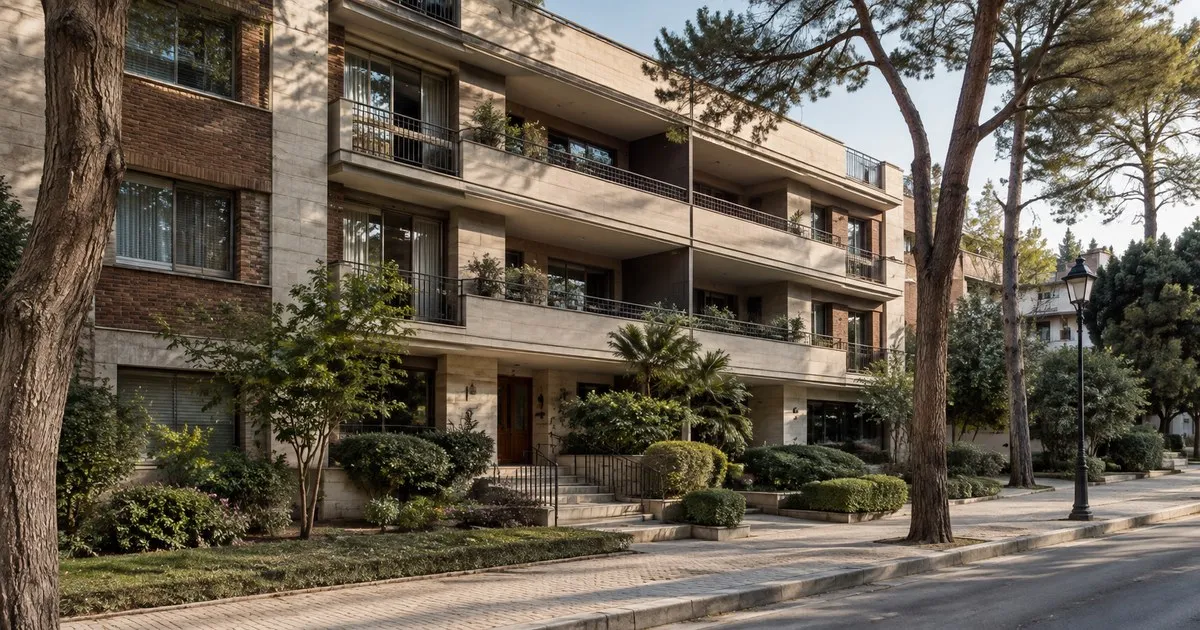
For an owner preparing to sell, the useful answer is a supported range: which similar homes inform it, what makes your apartment different, and which unresolved issues could change it. This guide uses information checked on 6 September 2026. The cover is an AI-generated illustration of a residential building, not a property offered for sale.
Read the 2026 numbers before using them
Idealista’s methodology defines its indicator as a monthly estimate based on active advertisements, rather than final transaction prices. Its methodology document also explains how it removes duplicates. A portal index can help you understand what buyers encounter online; a property’s disappearance from that portal does not establish its eventual sale price.
The Generalitat publishes registered home sales for Barcelona by district and neighbourhood. On the research date, its Barcelona sales page linked the first quarter of 2026 as the latest quarterly release. In the quarterly workbook, 321 of the district’s 343 sales are resale homes, with 22 new free-market sales. The average for resale homes is €6,677.06 per built square metre. The workbook also warns that some homes could not be geolocated. Do not confuse its first-quarter sheet with the separate rolling-year sheet.
That is a different observation period and a different stage of the market from August advertising. Check for a newer release when preparing your own valuation.
Keep two separate columns in your notes. One contains transaction evidence, with its date and source. The other contains current advertised competitors. If an agent supplies a completed-sale comparable, ask how the closing price was established and whether parking or another asset was included. An unverified claim that a neighbour sold for a certain amount belongs in neither column until you can substantiate it.
Do not calculate a standard negotiating discount by subtracting a quarterly registered average from a monthly listing index. Those figures do not track the same properties through a sale. Different dates, property mixes and definitions can explain a gap. Idealista’s explanation of the sample is particularly relevant when comparing flats with a series that also covers houses.
Give the most weight to evidence you can verify. A recent, well-documented transaction involving a comparable apartment deserves more attention than an unusually ambitious advertisement. An older transaction can still be informative, but state its date and examine the competition now. If you cannot verify close sales, label the exercise as an analysis of asking prices and leave greater uncertainty in the result.
Find your neighbourhood, then narrow the comparison
The six neighbourhoods to distinguish are Sarrià, les Tres Torres, Sant Gervasi-Galvany, Sant Gervasi-la Bonanova, el Putxet i el Farró, and Vallvidrera, el Tibidabo i les Planes. The municipal district publication identifies these areas. “Sarrià” can mean one neighbourhood in this discussion; it should not silently replace the whole district.
The August figures below come from Idealista’s district and neighbourhood table. They are asking-price indicators, not achieved prices or an appraisal of a particular flat.
| Area | August 2026 asking indicator |
|---|---|
| Sarrià-Sant Gervasi district | €7,167/m² |
| Sarrià | €7,813/m² |
| les Tres Torres | €7,389/m² |
| Sant Gervasi-Galvany | €7,679/m² |
| Sant Gervasi-la Bonanova | €6,915/m² |
| el Putxet i el Farró | €6,358/m² |
| Vallvidrera, el Tibidabo i les Planes | €5,091/m² |
Source: Idealista, August 2026 asking prices.
The registered neighbourhood figures need their sample sizes beside them. For example, the Q1 workbook records nine sales in Vallvidrera, el Tibidabo i les Planes, compared with 131 in Sant Gervasi-Galvany. Those are transaction counts, not a guarantee that every sale supplies every price metric. Generalitat Q1 workbook.
Treat the table as a prompt to refine the search. It does not justify moving your flat up to the most expensive neighbouring category. Check the address, then compare the kind of home a buyer could realistically substitute for yours.
Sarrià and les Tres Torres: check the actual building
Barcelona’s history museum documents Sarrià’s former town centre and its relationship with the surrounding territory in its Sarrià and Barcelona exhibition. For an apartment around the old centre, my recommendation is to inspect the entrance, stairs, lift and internal layout before using a comparable from a different building type. Record whether the apparent character also comes with practical constraints.
For les Tres Torres, the municipal market at Carrer dels Vergós, 2 provides a verifiable local reference in the city’s market directory. Use such landmarks to explain location precisely, then walk the route from the property. If a comparable has parking, a larger entrance or communal outdoor space, record those differences individually. A neighbourhood name does not tell you which of those features your buyer will receive.
Galvany and la Bonanova: describe daily use
The city places Galvany Market at Carrer de Santaló, 65. An apartment marketed around the market should be assessed from its own windows and entrance: where the bedrooms face, how deliveries or street activity sound during a viewing, and which rooms have privacy. Proximity is a fact to document; its effect on the price needs comparable evidence.
The municipality identifies Plaça de la Bonanova within Sant Gervasi-la Bonanova. Use the square or another exact reference rather than a loose “upper Barcelona” description. Test the route to shops and transport yourself. For both neighbourhoods, ask a buyer to compare the lived experience of the home: usable rooms, daylight and access. Avoid assigning a fixed premium for a school or a square without evidence for the property being valued.
Putxet and the mountain neighbourhood: walk the approach
The municipal description of Turó del Putxet park explicitly notes the steep terrain. That makes an access check useful when valuing an apartment nearby. Walk uphill to the entrance, check the steps before the lift and distinguish an open view from a photograph taken only from the roof. Do not assume every home in el Putxet i el Farró has the same slope or view.
Vallvidrera, el Tibidabo i les Planes needs particular care when your subject is an apartment. The municipal history exhibition situates Vallvidrera in Collserola and documents the funicular connection. Start with other apartments in a comparable setting; do not import a house-and-plot comparison because it shares the district label. Verify the actual journey and property boundaries. A view, garden access or outdoor area should be described according to what is legally included and practically usable.
Build a comparable file you can explain
The comparison method in Spain’s financial valuation rules requires sufficient information about comparable transactions or offers. Within that regulated scope, Article 21 specifies at least six. See Order ECO/805/2003. A seller’s informal spreadsheet is not a regulated appraisal, but the discipline of documenting comparable evidence is useful.
Start a separate record for each property. Include the source, capture date, address or approximate location, asking or verified transaction price, area definition, property type and condition. Add floor, lift access, outdoor space, parking and occupancy where known. Mark missing information as unknown. Guessing a terrace’s ownership or a flat’s floor area creates false precision.
Check for duplicates before calculating anything. Similar photographs, floor plans and room descriptions may point to one property advertised by several agencies. Idealista’s methodology removes duplicate advertisements for its index; your own small comparison file needs the same practical check. Otherwise one ambitious seller can appear to be several independent pieces of evidence.
Next, remove unsuitable examples and explain why. A detached house is a poor direct match for a third-floor apartment. A sale including a garage cannot be compared fairly with an apartment-only price until you understand the bundle. Keep rejected examples in a separate tab with a short reason, so the eventual range is not just a selection of the highest numbers.
Inspect the remaining differences rather than stacking automatic percentages. Suppose your apartment has good daylight but requires an electrical overhaul, while a competitor is renovated and faces a narrow courtyard. Those differences pull in different directions. Ask what the buyer would need to spend, what inconvenience remains after spending it, and whether your evidence can support a monetary adjustment.
Renovation receipts establish expenditure, not the amount another person will pay back. Tinsa’s energy-efficiency research illustrates the problem of separating overlapping characteristics. Cristina Arias, its Director of the Research Service, explains that more efficient homes also tend to be newer and better built, making simple price comparisons misleading. Her point supports caution; it does not supply a Sarrià-Sant Gervasi renovation premium.
For a proposed renovation, obtain a scope and quotation before deciding whether to sell first. Compare the likely buyer benefit with your cost, timetable and uncertainty. Sometimes a documented condition report and an honest asking price are more useful than choosing finishes on behalf of the next owner. That is a decision to test against comparable homes, not a universal recommendation to renovate or leave everything untouched.
A hypothetical calculation, with the missing decisions exposed
Imagine an apartment with a verified comparable area of 90 m². Choose €7,000/m² purely as an illustrative input. Multiplying 90 by €7,000 gives €630,000. Both the apartment and the rate in this example are hypothetical; €630,000 is not a valuation or a recommended asking price.
The exercise shows why the floor-area definition matters. If someone substituted 80 m² of usable area while keeping the same illustrative rate, the arithmetic would become €560,000. The €70,000 difference would come from changing the input, not from a market movement. The valuation order defines distinct floor-area concepts, so reconcile the documents before comparing rates.
Now write down what the calculation omits: the precise building, condition, access, ownership of outdoor space and any work affecting the building. Ask which omissions can be resolved with documents and which require a visit. Do not turn an unresolved question into an unexplained percentage deduction.
Write down a range and the reasons for its limits. It might state that the upper end depends on confirming the terrace rights and finding a close renovated comparable, while the lower end assumes the buyer budgets the outstanding works. No numerical range is supplied here because those facts have not been inspected for your property.
Keep that exercise separate from the published asking-price series. Multiplying a portal indicator by a floor area can give a rough indication, but it cannot establish the property’s condition or a buyer’s willingness to pay. Equally, your mortgage balance and desired proceeds are personal constraints. They should enter your decision about whether to sell, without being presented as evidence of market value.
Prepare the documents before negotiating
For a sale in Catalonia, the Generalitat describes the cèdula d’habitabilitat as the administrative document confirming residential habitability and identifies sale transfers among the situations requiring it. Read its habitability guidance and check the applicable circumstances with the professional handling your transaction. Do not assume that an old copy is still suitable.
The seller-documentation guidance also identifies the energy certificate and energy label for delivery to the buyer. See the Housing Agency’s seller checklist. Gather these early enough to correct discrepancies before someone makes an offer based on an incomplete description.
For the valuation appointment, I recommend a folder containing the deed, current registry information, cadastral details and floor plan, alongside the certificates. Add the latest owners’ association financial statements and meeting minutes, information about approved works and any lease or occupancy documentation. This is a working file for investigation, not a claim that every document has the same legal requirement in every sale.
The building deserves its own review. The Generalitat’s ITE guidance describes the inspection report as recording building characteristics, condition and apparent deficiencies affecting common elements. Ask the administrator for the relevant report, certificate and works information, then have unresolved technical issues explained. An apartment renovation does not tell you the state of the roof or façade.
If a special contribution towards shared building costs is proposed, distinguish discussion from approval and obtain the documents showing the amount and payment schedule. Ask your conveyancing professional how the contract should address responsibility. Avoid promising a buyer that a contribution is settled simply because you have paid the most recent instalment.
Where the floor plan, deed and cadastral description disagree, identify the discrepancy rather than choosing the largest floor area. The Cadastre law governs an administrative property description and valuation system; a cadastral entry should not be treated as a substitute for resolving every title or physical question. Have the appropriate professional reconcile the file before you advertise a disputed feature.
Match the valuation to the decision
A market estimate for setting an asking price, a mortgage appraisal and a tax value answer different questions. The financial valuation order limits its own scope and states that purpose conditions the valuation method. Tell the professional who will use the report and why before commissioning it.
For a normal sale discussion, ask for comparables, a valuation date, assumptions and a reasoned range. If a lender requires an appraisal, ask the lender which report it accepts. If co-owners are agreeing a buyout, agree the valuation date, property interest and assumptions in advance. A disagreement about the brief can survive even a carefully calculated number.
Cadastral value is an administrative value determined under the Cadastre law. The separate reference value has tax consequences. Where a property has a reference value, the Catalan Tax Agency explains that the ITPAJD taxable base uses the highest of that value, the declared value and the agreed consideration; inheritance and gift tax generally compares reference and declared values. Consult the ATC explanation and exceptions for the relevant transaction.
Neither administrative figure sets your asking price. A lower agreed sale price does not, by itself, settle the tax treatment. Where there is no reference value or it cannot be certified, the ATC guidance sets out different rules involving market value. Obtain transaction-specific tax advice rather than treating an online estimate as a filing instruction.
If your concern is the net amount left after selling, prepare a separate proceeds calculation with your adviser. Include the mortgage redemption position and applicable costs and taxes once verified. Keeping this separate helps you see whether a market-supported offer meets your needs without inflating the valuation to reach a preferred net figure.
Frequently asked questions
Can I use €7,167/m² to price my apartment?
Use it only as an August 2026 asking-price reference for the district. It comes from advertised housing, not a completed sale of your apartment. Check the neighbourhood, floor-area definition and close comparables before choosing a range. Idealista district report.
Do all six neighbourhoods belong in the same comparison?
Use the district as a starting point, then narrow to comparable homes in the relevant neighbourhood and immediate area. An apartment near a hill, a market or the historic centre of Sarrià needs its own access and building checks. The neighbourhood label alone does not establish a premium. Municipal district publication.
Does a renovation guarantee a higher sale price?
No. A renovation does not guarantee a particular return. Compare its condition with close alternatives and document the proposed work. Energy efficiency, building age and construction quality can overlap, so a broad study cannot supply an automatic renovation premium. Tinsa research.
Is the tax reference value my asking price?
No. The reference value has a tax role, and the applicable taxable-base rules depend on the transaction and whether a reference value exists. It is not a recommended asking price. Ask a tax professional about your case before using a valuation in a filing. Catalan Tax Agency.
What should I prepare for a sale valuation?
Bring the address, deed, floor-area information, floor plan and available certificates, plus building-work and occupancy documents where relevant. Explain your intended timing and any unresolved discrepancies. Ask for a supported range and check separately whether your transaction needs a formal appraisal. Habitability guidance and financial valuation rules.
Turn the evidence into a sale plan
Before publishing, put the proposed asking price beside the closest competing homes and the available registered-sales evidence. State what supports the position and what remains uncertain. The portal methodology gives a useful boundary: advertisements describe the supply side of the market, so enquiries and negotiations will add evidence your spreadsheet cannot yet contain.
Agree a review point and record the feedback from viewings. Repeated questions about a floor-area discrepancy call for a document check; repeated objections to condition call for a closer look at the competing homes. Review presentation and access arrangements as well as price. Do not treat every quiet week as proof of one particular cause.
To discuss your apartment’s evidence and selling timetable, sell with Pedro in Barcelona. Bring the property file and the price question you need answered. Ask for a range you can explain and a list of what to resolve before putting the home on the market.
Sources
- Generalitat: Q1 2026 Barcelona registered sales workbook
- Idealista: Sarrià-Sant Gervasi asking prices, August 2026
- Idealista: price-report methodology, 2026
- Generalitat: registered Barcelona sales by district and neighbourhood
- Municipal district publication: Sarrià-Sant Gervasi neighbourhoods
- MUHBA: Sarrià and Barcelona, 1921
- Barcelona municipal markets directory
- Barcelona: Galvany Market
- Barcelona: Plaça de la Bonanova
- Barcelona: Turó del Putxet park
- BOE: Order ECO/805/2003, consolidated financial valuation rules
- Tinsa: energy efficiency and residential value, January 2025
- Generalitat: habitability certificates
- Generalitat: documents the seller must deliver
- Generalitat: building inspection FAQ
- BOE: consolidated Immovable Property Cadastre Law
- ATC: property valuation and reference value